Tuesday, July 27, 2010

The Concept of the Balladeer

Just wanted to highlight the "Balladeer" portion of the article Abdiel posted...

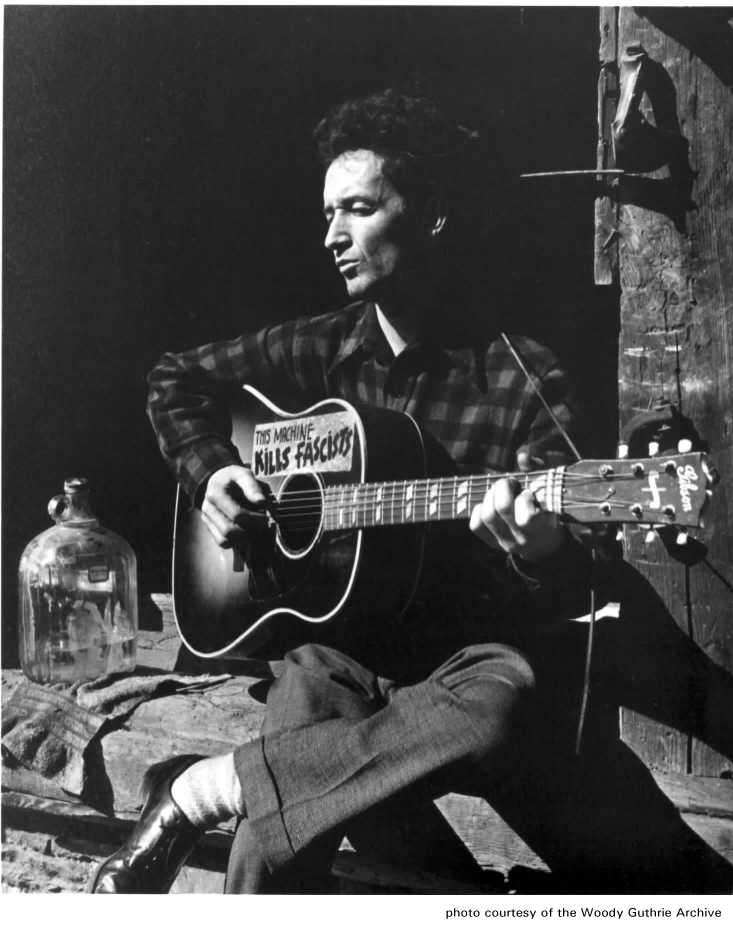
The Balladeer is the other conceptual character. He represents the American public and the American storytelling tradition, and so is portrayed as a folk singer, the only form of storytelling that has lasted through all the time periods represented in the show. From the founding of our country to the present, folk singers have passed on our stories. Other forms of storytelling have emerged as well, books, radio, movies, TV, video games, etc., but the folk singer endures. The key to the Balladeer lies in the fact that as stories are passed down from generation to generation, as they are turned into songs, plays, and other storytelling forms, they are, of necessity, simplified. Particularly in America, they are also infused with optimism and the inevitable triumph of good over evil. As the personification of these stories, the Balladeer embodies an intentionally shallow, over-simplified view of history. His winning smile, easy going manner, and theme park enthusiasm provide an important contrast to the darkness and driving intensity of the assassins, particularly in "The Ballad of Booth" and "Another National Anthem." He represents everything that the assassins hate about our country and in "Another National Anthem," they must silence him.

To further strengthen the Balladeer’s role, one production set him out in the audience during the opening number; he then began "The Ballad of Booth" from out in the house, reinforcing the idea that he represents the American people. He is us. He has our many prejudices and preconceptions about America and about the assassins; he is very clearly not an objective narrator

Monday, July 26, 2010

Squeaks!

http://www.youtube.com/watch?v=P-fJGxTfeqI
Just a great interview of Lynette Fromme from the 80's.

Wednesday, July 21, 2010

The Assassination of Richard Nixon


Just watched this movie today. A film heavily based on the life of Sam Byck- played by Sean Penn. Some really good insight on what would drive an american man (or woman) to attempt an assassination. Check it out if you can!

Sunday, July 18, 2010

The Proprietor

Assassins includes characters who represent concepts. The Proprietor represents our country, run amok with violence, dissent, the refusal to understand complicated issues, and the adulation of wackos. We live in a country where the public applauds criminals whose crimes are strange enough to get them on the talk shows, where fame is happily bestowed on people who commit bizarre, violent acts against their spouses or stack up dead bodies in their cellar. The Proprietor is the personification of this upside-down world of ours, where we give disturbed individuals guns while we make sure they can’t achieve the rewards we’ve taught them to expect. They learn that committing a crime in a very public way is an easy path to fame and fortune. In the opening scene of Assassins, the Proprietor preys on each character’s individual insecurities, then offers them the one sure way to realize the American Dream – killing the president.

The Proprietor is a literal embodiment of the insanity of our modern world, a full blown – yet terribly seductive – psychopath. And as with many psychopaths, you can’t see it in him. Imagine all the rage, ambition, want, and resourcefulness of America all stuffed into one person. Frightening though he may be, the assassins find his messages enticing and his promises impossible to ignore.

-http://www.newlinetheatre.com/assassins.html

-Thanks to ABDIEL

Background and Analysis by Scott Miller

http://www.newlinetheatre.com/assassins.html


Thanks to Christian!

Saturday, July 3, 2010

Thursday, July 1, 2010

"Goodbye...adieu to the world. Go ahead, push the button."

The Attempted Assassination of FDR

JWB: Ballad of Booth

Ideas :
-towards the end... take off splint, to keep respect and honor
-Vulgar (b) High and Mighty Niggar Lover Never! Never, (b) Never, (b) Never. (b)


Support:

"Some say it was your voice had gone"
There's been some superficial theories that his voice was giving away on him, that he had not had the proper training that his older brother had had and that he had sort of reached his peak and there was nowhere else to go. - A&E Biography

"Some say it was booze"
In contrast the nations celebration of the war's end, he was known to be fairly drunk some of the time. He was drinking a quart of Brandy at a time. - A&E Biography

-It is also a country in which we want everything explained in ten-second sound bites. The Balladeer wants a neat and simple motive for John Wilkes Booth’s act of violence – bad reviews, sibling rivalry – but from the very beginning, Assassins declares that there are no easy answers. Booth believed in his cause, believed that the country he loved so deeply was being torn apart, believed that Lincoln was the cause.

The Case for Booth

The power of Assassins – like 1776 and other historical dramas – is its ability to make fully drawn human beings out of the one-dimensional cardboard figures of history books. In Assassins, John Wilkes Booth may be somewhat unbalanced thinking assassination will solve America’s troubles, but he honestly believes he is a patriot. He didn’t kill Lincoln for fame or glory; he killed him to save the country. Looking back, we may quarrel with Booth’s assessment of the state of the union, but it’s important to remember that Lincoln was a widely disliked president; he was not "the pride and joy... of all the U.S.A.," as the Balladeer sings. Booth’s indictments against him are true. Lincoln did throw political dissenters into prison without charge or trial. His decision to abolish slavery was more economic than moralistic. Booth loved his country deeply and saw quite accurately that it was on its deathbed. The issue of slavery is beside the point here. Though we can see in retrospect that slavery was unconscionable, it’s easy to see how it was condoned by society and by people like Booth; Thomas Jefferson and other very moral men owned slaves. From our modern vantage point, we can call Booth a racist, but at the time, his view of slavery was not outside society’s norm. All he could see was that Lincoln was effectively destroying the economy of the South.

The section of "The Ballad of Booth" that begins with "How the country is not what it was..." is profoundly moving. This is not a madman talking; this is a man who loves the U.S.A. and can’t bear to see it divided and its citizens murdered in a bloody war. Many historians have commented that had Booth killed Lincoln two years earlier, he might’ve been hailed as a hero instead. Are Booth’s concerns that different from those voiced by commentators today? Americans across our nation often feel that the president or other politicians are destroying our way of life. Booth wasn’t that different from the protesters during the Vietnam war. Certainly we can’t sanction his method of righting the perceived wrongs – cold-blooded murder – but we also can’t ignore the despair he must’ve felt over the destruction of his beloved country, a destruction that was very real. "The Ballad of Booth" can be a deeply moving, impassioned plea for understanding by a man who honestly believed he was doing what had to be done. Saddest of all in Booth’s hope that the history (i.e., the Balladeer) will pass on the truth; it won’t. Booth’s motivations, passions, and beliefs will be ignored or distorted.

What most people don’t know – what History (personified here by the Balladeer) has left out and distorted – is that John Wilkes Booth was at the top of his fame and wealthy beyond his dreams when he decided to give it all up to kill Lincoln. He’s being sincere when he says, "I have given up my life for this one act." And what he gave up was considerable – he was making about $20,000 a year, an incredible sum at that time. More than that, he was universally adored. He had tons of friends. He was friendly to both the rich ladies who craved his company and to the stable boys. He often gave money to kids on the street. When he dined out with friends, he usually picked up the bill. People thought of him as kind, charming, generous, and a genuinely good man. He absolutely did not kill Lincoln over bad reviews (he was getting stellar reviews) or a failing career (he was becoming an even bigger national star than his older brother) or the need for attention (he was always in the papers and was a big league celebrity wherever he went).

Booth’s motives were political and born out of a genuine and desperate love of his country. Yes, he was a racist, but then again, so were many of the greatest men in history – it’s naïve to condemn him for that any more than we would condemn Jefferson or Washington for it. That’s not say it’s excusable, but it is easy to understand. His racism had nothing to do with his hatred of Lincoln. He hated Lincoln for destroying his country, for killing thousands of American boys, and for trampling on the Constitution, taking powers from Congress that were not his to take. We now know that Abraham Lincoln desecrated in some ways the very foundation of our American government. He ignored – some would say overthrew – the careful construction of the three branches of government designed to hold each other in check, the structure our Founding Fathers so carefully created to avoid tyranny and corruption. He declared war without the approval of Congress. He threw innocent people into jail in both the North and the South without charges and without trials. And as a result, many people hated him, in both the North and the South. They believed he was destroying our country. So it wasn’t all that unreasonable for Booth to think he’d be hailed as a hero for killing Lincoln. Michael Phillips, producer of the political assassination film Taxi Driver, says, "The difference between a hero and a monster is such a fine line."

In "The Ballad of Booth" we can see Booth’s confusion and utter despair over the way the country turned its back on him (at least in his perception), as well as his great sorrow over the destruction of a country he loved with all his heart. He was misguided and he was a murderer – there’s no ignoring that fact – but he was also in many ways, very patriotic.

Tuesday, June 29, 2010

Taxi Driver Poster

Mr and Mrs. Hinckley's Defense Witness Statements at Trial

JoAnn Hinckley, Defense Witness


On direct examination:

John seemed to be going downhill, downhill, downhill and becoming more withdrawn, more antisocial, more depressed, and more down on himself. He was just discouraged and we were just terribly worried about him....We didn't know what was wrong, but we knew something wasn't right....We wanted John to be self-supporting, to be a happy child, to stand on his own two feet....The harder we tried to push him from us, the harder he tried to stay....

Dr. Hopper strongly advised us not to do it [to institutionalize John]. He talked us out of it....Dr. Hopper said, "No, don't do it. It will really make a cripple out of John if you put him in an institution."

[On the last trip with John to the Denver Airport, three days before the shootings:]
I broke down for the first time and gave him some money of my own. I just couldn't stand to see him go off without any money...[At the airport], John got out of the car and I couldn't even look at him. He said, "Well, Mom, I want to thank you for everything you've done for me." I said, "You're very welcome" and I said it so coldly...and then I drove off and that was the last I saw of John....On March 30, I received a telephone call. It was a reporter from the Washington Post. He said, "Mrs. Hinckley, do you have your television set on?....Did you know your son John Hinckley is the man they have identified as shooting the President?


Jack Hinckley, Defense Witness

On direct examination:

[ Jack Hinckley met John at the Denver Airport on March 7, 1981, and informed him of the family's decision to cut off his financial support. Testimony concerning that meeting follows:]

I prayed all the way [to the airport] that we were doing the right thing....He was in very bad shape. He needed a shave. He was wiped out. He could hardly walk from the plane. We sat down and I told him how disappointed I was in him. How he had let us down, how he had not followed the plan [for independence] we had all agreed on. He had left us no choice but to not take him back in the house again, but force him to go on his own. So that's what I did. I took him to his car which was parked at the airport. It was an old car and the radiator leaked. And I put some antifreeze in it and we got the car started. And I had a couple of hundred dollars with me that I had brought from the house. And I gave that to him and I suggested that he go to the YMCA. He said he didn't want to do that. I said, "Okay, you are on your own. Do whatever you want to do." In looking back on that, I'm sure it was the greatest mistake in my life. We forced him out at a time when he just couldn't cope. I am the cause of John's tragedy. I wish to God I could trade places with him right now.

http://www.law.umkc.edu/faculty/projects/ftrials/hinckley/hinckleytranscript.htm


John Hinckley's Poems

This first poem might be where Sondheim found some inspiration for "The Gun Song." These are excerpts of poems written by John Hinckley - used as evidence in his trial.

Guns are Fun!
See that living legend over there?
With one little squeeze of this trigger
I can put that person at my feet
moaning and groaning and pleading with God.

This gun gives me pornographic power.
If I wish, the president will fall
and the world will look at me in disbelief,

all because I own an inexpensive gun.
Guns are lovable, Guns are fun
Are you lucky enough to own one?

I Know a Girl

I know a girl who is beyond words;
I don't know her well but I know her.
I know she knows that I know her
and she knows that I love her.
I don't know her true feelings towards me
but she knows that I know her name.

Amen

Jodie isn't plastic nor does she
cry
at the sight of me writhing in
pain
down in the gutter of Anystreet USA
because Jodie will always be
Jodie.

Don't cry for me Arizona
the truth is
I brought it on myself
in a calculated way
and by means which
I would postively hurt
everyone around me.

The Painful Evolution

In the beginning
it was a time for pretending.
The martyr in me played games
and I was the young alienated loner.

Toward the middle,
I lied about pain and troubles.
It was a mere three years ago
that I played the part so well.

Nearing the bend,
I should have turned back.
I could have taken the road
that leads to meaningful existence.

In the end,
I cursed myself and suffered.
I have become what I wanted
to be all along, a psychotic poet.

Monday, June 28, 2010

JWB: A&E Biography Notes

Melodious voice

Know for impulse acting…he was the passionate one…the richard the 3rd…
He was known for his physical prowess on stage, very athletic, very live, very impulsive, very passionate. And in his roles, be it Romeo or Richard the 3rd, he was known for his swashbuckling abilities. And he fit the part. He dressed accordingly. And he acted his own way.

John was not known for preparing well. In fact there is a story about him pacing up and down the floors of a Philadelphia boarding house, while he was with the Archstreet Stock Company, marching up and down saying "I must have fame…fame." And his friends all wondered how he was going to get it if he didn't work for it.

In 1862, he performed in Saint Louis, Chicago, Baltimore, New York, Boston, Louisville, Lexington, and Cincinnati. He was Hamlet, Macbeth, Othello and Romeo. Appearing 167 times, Booth played 18 different roles in the course of a single year. Booth flourished during the war. He would play in a given theatre for a week, supported by the stock company and then move on to another theatre. He would sometimes make $1,000 dollars a night. He was a very young star, being around 24, 25 years old.

He played Richard the 3rd on November 2nd, 1863 & Romeo on May 7th, 1864.

An avid reader of the newspaper.

Seemingly in the peek of his carrier, Booth's main focus drifted away from acting. There's been some superficial theories that his voice was giving away on him, that he had not had the proper training that his older brother had had and that he had sort of reached his peak and there was nowhere else to go. I have a sneaking suspicion that his confederate sympathies were taking over. He realized that his beloved South was going down hill. I think his strong Maryland background kicked in.

At Ford's Theatre in Washington D.C., ten days before Lincoln gave his famous speech at Gettysburg, he saw Booth perform in the "Marble Heart". Lincoln asked Booth to come back and see him later- that he wanted to shake hands with him and it is said that Booth said "I would rather have the applause of a nigger."

Booth apparently had tired of acting. He was determined, finally, to react to the war. In october he traveled to a northern hotbed of Southern Sympathies, Montreal, Canada. After meeting with confederate agents, Booth returned to Maryland and began slowly to assemble a plan to kidnap Abraham Lincoln. His horrible plot had a humanitarian appeal. Booth hoped to trade he President back to the US in exchange for confederate prisoners of war hopelessly trapped in northern prison camps.

In contrast the nations celebration of the war's end, he was known to be fairly drunk some of the time. He was drinking a quart of Brandy at a time. He was unhappy with history. He could not accept the outcome of the Civil War and he hoped to do something to change it. JWB and some of his fellow conspirators were in the crowd gathered on April 11th at the White House. Abraham Lincoln spoke and suggested a newly reconstructed government offer the right to vote to African American citizens. This outraged Booth, he said, "This means nigger citizen chip, now i'm going to get him. That's the last speech he'll ever make." So 3 days later when he heard Lincoln was going to be attending a play at Ford's Theatre I think he began to make his plans for an assassination.

It was known within Booth's family that he was secretly engaged to wed. He's fiance's family would not have preferred their marriage, Lucy Hale's was the daughter of a US senator.

After several shots of whiskey. He went to the Ford theatre that night.

There's no reason to think that there was anything wrong with John Wilkes Booth. He just hated Lincoln. And at a time he was a true believer. He believed in the cause of the South. And this was a time when hundreds of thousands of American men were willing to kill and to die for what they believed in. Booth saw himself as a southern solider. And he saw his act as an act of war.

"I love peace more than life. I have loved the Union beyond expression. For four years I have waited, hoped and prayed for the dark clouds to break and for a restoration of our former sunshine. To wait longer would be a crime. All hope of peace is dead. God's will be done, I go to see and share the bitter end." - JWB

Sunday, June 27, 2010

JWB: Youtube on Ballad of Booth

ASSASSINS- Ballad of Booth (Scene #2)
noticed:
-drinking
-tearing out pages from diary
 

Ballad of Booth from Assassins
noticed:
-a moment of consideration of leaving, giving up or stopping Harold when he leaves


Assassins- The Ballad of Booth
noticed:
-emphasizing the "e" vowel on the first "Never"


Assassins pt. 2 - Ballad of Booth


FabioVagnarelli - The Ballad of Booth da "Assassins"


Assassins Part 2 - The Ballad of Booth Parts 1 & 2


Victor Garber - Ballad of Booth
noticed:
-"let it mingle with the ashes of the country" sounds like weeping
last time- "the country is not _ what _ it was"

Thursday, June 24, 2010

Video of Hickley's Assassination Attempt

http://www.youtube.com/watch?v=ZDIVheB5kIM&feature=related

Basic Hinckley Info

John Hinckley

John HinckleyAKA John Warnock Hinckley, Jr.

Born: 29-May-1955
Birthplace: Ardmore, OK

Gender: Male
Race or Ethnicity: White
Sexual orientation: Straight
Occupation: Assassin

Nationality: United States
Executive summary: Took a shot at President Reagan

Wacko psychopath who stalked Jodie Foster for a time, while she was at Yale. He became obsessed with her after seeing her in Taxi Driver (1976), and began writing her letters and love poems, even scoring a couple of chats on the phone with her. Hinckley believed that by assassinating the President of the United States, he would win her love and respect. At the time, that official was Jimmy Carter. Hinckley went to a couple of his campaign stops in 1980, only to be arrested for attempting to bring firearms onto an airplane in Nashville in October 1980. For a few months, he lived with his parents, and was cut off at his psychiatrist's suggestion after failing to find a job.

Meanwhile, Carter lost the election and Ronald Reagan was elected. At the end of March he took a bus to Washington, D.C., arriving on 29 March. Hinckley stayed up late that night, composing a letter to his lady love, detailing his plan to assassinate the President. The following day, he went to a labor convention at the Washington Hilton, where Reagan was scheduled to speak. He fired several shots from a .22 at Ronald Reagan, striking him once under the left armpit. He also critically injured press secretary James Brady, and injured Secret Service Agent Timothy J. McCarthy and Washington DC Police Officer Thomas K. Delahanty. A copy of The Catcher in the Rye was found in Hinckley's hotel room.

While awaiting trial, Hinckley tried to commit suicide by overdosing on Tylenol on 29 May 1982, but failed. In August he was indicted for the attempted assassination of Ronald Reagan, only to be found not guilty by reason of insanity on 21 June 1982.

In 1999 he was allowed the right to trips outside the hospital, supervised by the Secret Service. In April 2000, he won the right to unsupervised furloughs, only to have this privilege revoked when guards found a book about Jodie Foster in his room.

Father: John Hinckley
Mother: Jo Ann Moore Hinckley
Brother: Scott B. Hinckley
Sister: Diane

Jodie Foster in Taxi Driver

Letter to Jodie Written Immediately Before Assassination Attempt

    Dear Jodie:

      There is definitely a possibility that I will be killed in my attempt to get Reagan. It is for this very reason that I am writing you this letter now.

      As you well know by now I love you very much. Over the past seven months I've left you dozens of poems, letters and love messages in the faint hope that you could develop an interest in me. Although we talked on the phone a couple of times I never had the nerve to simply approach you and introduce myself. Besides my shyness, I honestly did not wish to bother you with my constant presence. I know the many messages left at your door and in your mailbox were a nuisance, but I felt that it was the most painless way for me to express my love for you.

      I feel very good about the fact that you at least know my name and how I feel about you. And by hanging around your dormitory, I've come to realize that I'm the topic of more than a little conversation, however full of ridicule it may be. At least you know that I'll always love you. Jodie, I would abandon the idea of getting Reagan in a second if I could only win your heart and live out the rest of my life with you, whether it be in total obscurity or whatever.

      I will admit to you that the reason I'm going ahead with this attempt now is because I cannot wait any longer to impress you. I've got to do something now to make you understand, in no uncertain terms, that I'm doing all of this for your sake! By sacrificing my freedom and possibly my life, I hope to change your mind about me. This letter is being written only an hour before I leave for the Hilton Hotel. Jodie, I'm asking you to please look into your heart and at least give the chance, with this historical deed, to gain your love and respect.

      I love you forever,

      John W. Hickley


      http://www.law.umkc.edu/faculty/projects/ftrials/hinckley/letter.htm

Woody Guthrie